How to Start Writing (Part Two): Brain Dumps, Mind Maps & Writing Sprints
How to start writing part two! Part one is over here, so go check that out first.
I’m sitting here with my third coffee of the day (don’t judge), having just finished another 30-minute writing sprint on my current work-in-progress.
The deal I made with myself this morning was simple: write for 30 minutes, (OK, it was 15 minutes to start with, but then I built it up to 30 minutes!) then, reward myself with coffee and a snack, repeat.
And you know what? It’s working.
I’m up to 25k on my WIP and, I’m happy to say that the words are flowing, the story’s moving forward, and I haven’t once spiraled into that pit of “but is this any good?” I mean, it’s there, the inner critic is always there, but I haven’t actually gone back to edit, so I’ve stopped listening to it for a while.

If you read Part One of this series, you’ll know I talked about freewriting and morning pages as ways to start writing.
Those tools are brilliant for some people, some of the time. But here’s what I’ve learned over 20+ years of writing, there’s no one magic method that saves you every single time you sit down to write.
Sometimes morning pages feel perfect. Other times, you need something different to unstick yourself.
Today, I want to share three more techniques that have genuinely saved my writing when I’ve been stuck, frustrated, or staring at a blank page wondering if I’ve forgotten how to string words together and these are, brain dumping, mind mapping, and writing sprints.
Table of Contents
Brain Dumping: When Your Head is Too Full to Write
Let me tell you about Closer Than She Thinks, my last thriller.
If you’ve been following me for a while, you’ll know this was one of the hardest books I’ve ever written. It took me a long time.
I was crippled with self doubt, and seemed to be stuck in an editing loop.
I had this image in my head of an older woman having an affair, all these tangled ideas about secrets and lies, and absolutely no clue how they fit together. With a psychological thriller, you have to have lots of twists and turns, which I love planning and writing, but I got myself into a real muddle with this book.
The story felt too big, too messy, too much going on at any one time. Every time I tried to start writing, my brain would throw seventeen different plot threads at me, or I’d go off on a ‘what about this!?’ idea, and I’d freeze. Many days with no words on the page AT ALL.
So I did a brain dump.
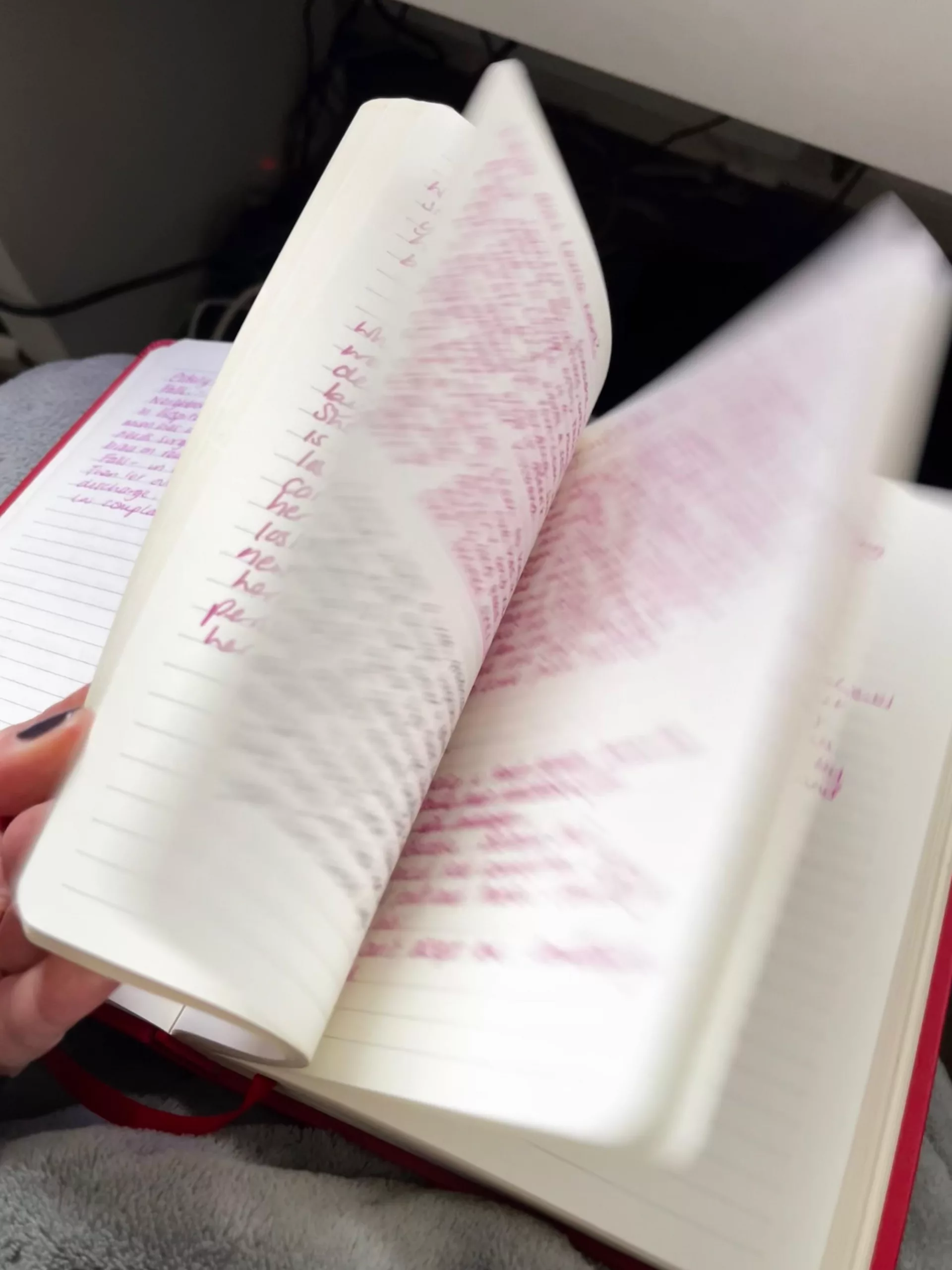
I grabbed a notebook and just wrote everything down. Here is a picture of said notebook, see all those scribbles? That’s me trying to work out the damn plot.
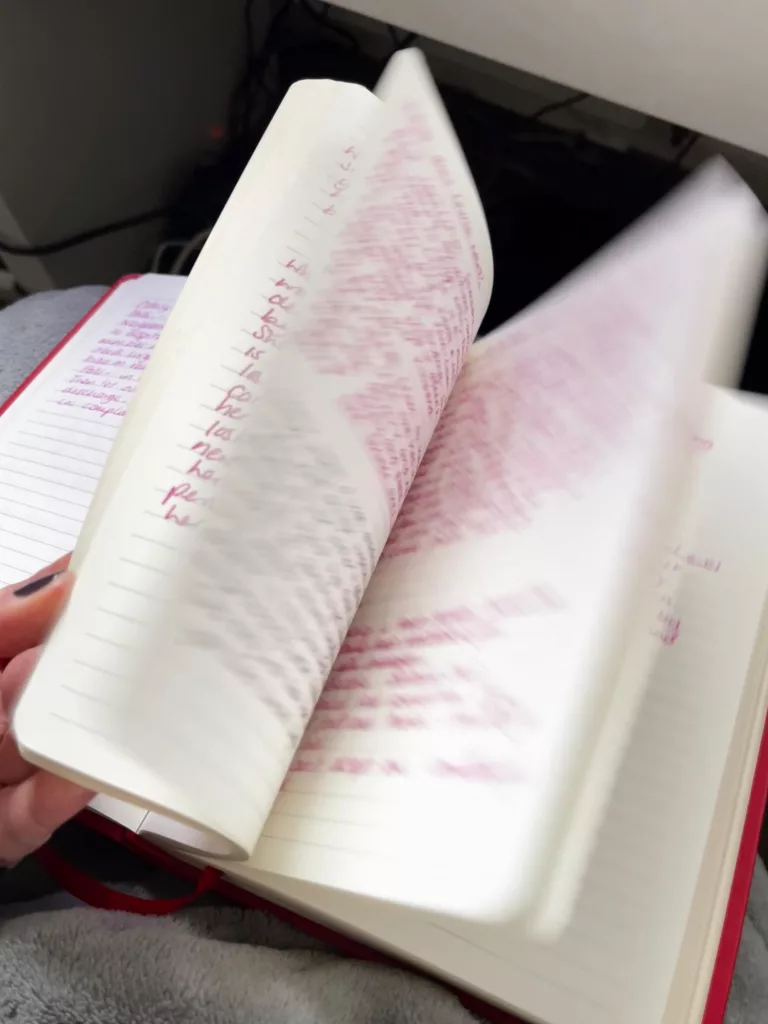
The affair. The twists I was imagining. Character names I liked. Random scenes. Questions I didn’t have answers to yet.
Things that didn’t make sense. All of it, just spilled onto the page with zero judgment about whether any of it was good or useful or even coherent.
And, this is the beauty of journaling, of just writing it down and I’m finding it’s the same with how The Morning Pages are working out for me as well, once it was all out of my head and onto paper, I could actually see what I was working with.
The chaos started to have shape.
What Brain Dumping Actually Is
Brain dumping is exactly what it sounds like, the clue is in the name, you dump everything that’s in your brain onto a page. According to The Savvy Red Pen, it’s “the process of recording your thoughts about a specific topic or aspect of a topic by writing them down on paper as they are occurring.”
It’s not journaling. It’s not organized thinking. It’s just getting the noise out. And I know, it can be tricky at first. The fresh, new, notebook that needs to have neat handwriting in and you’re just going to scribble ideas down all over it? But that’s how this works.
You know that feeling when you have so many ideas or worries or half-formed thoughts bouncing around in your head that you can’t focus on anything? That’s when you need a brain dump.
How to Do It (Without Overthinking)
The great thing about brain dumping this way, is there is no rules in learning how to write with a brain dump first. NO RULES AT ALL.
Get a notebook or open a blank document, I personally think it works better if you do this the old fashioned way with pen and paper, but do whatever works for you.
Set a timer for 10-15 minutes if that helps you commit. Then write everything that’s on your mind about your story, your project, your writing life, whatever you’re stuck on.
Don’t worry about:
- Grammar
- Spelling
- Making sense
- Being organized
- Sounding smart
- What your handwriting looks like if you are using pen and paper
Just write. Fast. Messy. Everything. Anything. Whatever comes to mind. Remember, there are NO RULES HERE.
“Write ALL of the ideas, even if you think (or know) that they’re bad,” advises Stacie Bloomfield. “If you don’t write down that idea that’s in the front of your mind, the one that you know isn’t ‘the one’, it will just SIT THERE. In your brain. Clogging it up.”
She’s so right. Those bad ideas or random thoughts are like mental traffic jams. Get them out of the way so the good stuff can move.

What to Do After Your Brain Dump
Once you’ve done your brain dump, you have options:
You can walk away and leave it (sometimes that’s all you need, the relief of getting it out).
Or you can go back with colored highlighters and circle patterns, group similar ideas together, star the things that feel most important. You’re not editing here, you’re just noticing what emerged.
For me with Closer Than She Thinks, I went back through my brain dump and circled everything related to the central mystery. Suddenly I could see the skeleton of a plot I hadn’t been able to see before.
I then did the same with character arcs, looking at what needed developing, what I hadn’t fleshed out, what a glimmer of an idea could be used and pulled into something more.
It was the start of me getting the structure down to that book, and it helped enormously.

Mind Mapping: For When You Need to See the Connections
Brain dumps work when you’re overwhelmed. Mind maps work when you need to see how things connect.
I’ll be honest: I’m not naturally a visual thinker. I write in sentences, not pictures. But when I’m plotting a novel and trying to track multiple character arcs, subplots, and that one twist I want to plant in chapter three that pays off in chapter twenty? That’s when I need a mind map.
What Mind Mapping Actually Is
A mind map is a visual diagram that starts with one central idea in the middle of your page, then branches out in all directions with related thoughts, like a tree or a spider web (but less creepy).
Grammarly explains that “writers and researchers often use mind maps to organize overlapping concepts in a novel, such as characters, subplots, and themes. Because their branches can grow in multiple directions, mind maps are better equipped to record nonlinear thinking than outlines.”
And that’s the key bit: nonlinear thinking. Because our brains don’t work in neat bullet points, do they? They jump around, make connections, see patterns. Mind maps let you work the way your brain actually thinks.
I like to do this right at the start of a book, when I have that idea that won’t leave me alone. I write the hook in the centre of the page, then add things to it with lines coming off.
How to Make One
Start with a blank page (paper works great for this, or a huge white board if you have one that you can leave up in your office as you work)
Write your central topic in the middle. For a novel, that might be your protagonist’s name, or your central conflict, or even just “Book 2.”
Then start branching out. Don’t think too hard about it. Just ask yourself: what connects to this? Write down the first things that come to mind and draw lines connecting them to the center.
From those branches, more branches can grow. Under “main character,” you might have branches for backstory, motivation, fears, relationships, whatever comes to mind, even stuff like character quirks. Get the idea?
The British Council notes that mind maps are “a spontaneous pre-writing activity. Students start with a topic at the centre and then generate a web of ideas from that, developing and relating these ideas as their mind makes associations.”
If you’re a visual person, use colors. You can use a different colour for each character or plot point whatever works. Or maybe draw little symbols or doodles, you can make it messy and creative. If you’re not especially visual (like me), just use words and lines. There’s no wrong way to do this, remember as I said before, THERE ARE NO RULES HERE.
When Mind Maps Work Best
Mind maps are brilliant for:
- Planning complex stories with multiple plotlines
- Developing characters and seeing how they relate to each other
- Exploring themes and where they show up in your story
- Unsticking yourself when you can’t see how pieces fit together
- Getting unstuck from writer’s block by visually exploring possibilities

Writing Sprints: When You Need to Outrun Your Inner Critic
And now we come to the technique I’m using right now, my favourite and the one that helps me the most. I’ve actually just finished a writing sprint on my novel, my WIP, before writing this post.
Writing sprints.
I set a timer for 30 minutes, or 15 minutes depending on how I’m feeling and where the book is up to then I write as fast as I can for that time. I don’t stop to edit, or correct spelling and grammar mistakes. I don’t pause to find a better word. I don’t second-guess whether this sentence is good enough. I just write.
When the timer goes off, I get my coffee and snack reward. Then I do another sprint.
This is how I’m drafting my current work-in-progress. This is how I’ve written most of my novels, actually.
Because writing sprints do something magical, they shut down the perfectionist voice and the evil inner critic that tells you every word has to be brilliant and spelt correctly and maybe you should just go back and rewrite that paragraph, and who is going to read this anyway? And… you get the idea.
What a Writing Sprint Is
I’m going back to my THERE ARE NO RULES caveat here, but this is how I do it. You can start here and then develop your own technique, or steal mine. Whatever works, but the timer is the key.
It creates urgency and gives you boundaries. When you know you only have 20 minutes to write, you don’t have time to fuss over whether “walked” or “strolled” is the right verb. You just pick one and keep going because you only have so many minutes to get that scene down.
Why the Timer Matters
The beautiful thing about a timed sprint is that it’s short enough to not feel overwhelming, but long enough to get you into flow. They get rid of any procrastination and for me, they stop the feeling and the excuse that ‘I don’t have time right now.’
Because if you only have 5 minutes, then that could be a 5 minute writing sprint. Do it on your phone, scribble in your notebook or whip open your laptop. The 5 minutes here and there really add up and they move you forward.
And momentum is what gets books written.
How to Do a Writing Sprint
It’s really easy, but it you’ve never done it before, here are some pointers and this is how I do it.
- Know what you’re writing. Before you start the timer, have a rough idea of what you’re working on. I sometimes make notes and jot out the scene.
Something like, “Rebecca meets Ruth and Ruth warns her about Samantha.” I don’t need the whole scene planned, just enough direction to start, but the main thing to make a note of what the conflict will be in the scene. Just so you know where the tension is going to come from that will drive the scene forward. - Set a timer. Start with 10-20 minutes if you’re new to this. Work up to 30-minute sprints as you get more comfortable. (I use my phone timer, nothing fancy.)
- Write without stopping. When the timer starts, write. Don’t edit. Don’t delete. Don’t check your word count, or stop for spelling or, and this is where I go wrong most, flip over to Google to research something you just wrote. Just write. If you get stuck, write ‘ADD XXXXX HERE’ and keep writing.
- Stop when the timer goes off. Take a break. Stretch. Get coffee. Celebrate the fact that you just wrote for 20 solid minutes.
- Do not edit yet. This is crucial. The whole point of sprints is to stay in the creative, fast-writing part of your brain. Editing switches you into the critical, slow-thinking part. Save editing for later.
The Messy Magic of Sprint Writing
I’m not going to lie to you, this won’t be perfect AT ALL. What comes out of a writing sprint is often messy and needs a good editing afterward. There are typos and sentences that don’t quite work. And all those bits where I’ve put ‘ADD XXXXX HERE’
But that’s OK! In fact that’s brilliant, because you are getting the what I like to call, vomit draft done and all those things can be fixed really easily later.
Writing Sprint Variations
You don’t have to write alone. Some writers love doing competitive “word wars” where they sprint alongside friends to see who can write the most words. I’ve never tried that but think I might like it!
You can also try the Pomodoro Technique which is basically, 25 minutes of writing, 5-minute break, repeat. After four sprints, take a longer 20-30 minute break.
Or you can do what I do, just do whatever works that day.
Sometimes that’s 30-minute sprints with coffee rewards. Sometimes it’s 15-minute bursts between life admin. The point is to write without editing, for a set amount of time, then stop.
Which Tool When?
So how do you know which technique to use?
Here’s my rough guide:
Use brain dumping when:
- Your head feels too full to focus
- You have a million ideas and can’t organize them
- You’re overwhelmed and don’t know where to start
- You need to get mental clutter out of the way
Use mind mapping when:
- You need to see how ideas connect
- You’re plotting something complex
- You’re developing characters or themes
- Traditional outlines feel too rigid and boring
Use writing sprints when:
- Perfectionism is keeping you frozen
- You’re procrastinating on actually writing
- You need momentum more than you need polish
- You want to write every day without burning out and just want that first draft done
But you don’t have to choose just one!
You can brain dump your story ideas, then mind map the connections you noticed, then use writing sprints to actually draft the thing. Which is how I like to do stuff.
These aren’t productivity hacks designed to squeeze more output from you. Think of them as permission slips. Permission to be messy. Permission to not have all the answers before you start. Permission to write badly and fix it later. Permission to write a really crappy first draft. Permission to have enormous fun with ideas and stories and surprising yourself at the keyboard.
Start Writing (Your Way)
You don’t need to master all three of these techniques tomorrow. You don’t even need to try all three this month.
Just pick the one that sounds least terrible when you’re stuck next. Try it. See what happens.
Maybe brain dumping will unlock the story that’s been tangled in your head for months. Maybe mind mapping will help you finally see how all your subplots connect. Maybe writing sprints will teach you that you can write 1,000 words in 30 minutes when you stop trying to make them perfect.
Or maybe you’ll discover that freewriting from Part One works better for you. Or that you need to combine techniques. Or that you work best when you’re not following any method at all and you’re just scribbling in a notebook in your cozy writing space while pretending to be a Victorian poet. (Ha!)
The point isn’t to do it perfectly. The point is to start writing, and keep writing and more importantly, blummin’ enjoy it!
If you want more writing tips, tricks, and gentle encouragement from someone who’s been in the stuck-and-frustrated trenches more times than I can count, I share weekly writing stuff from social media help to writing help, to just letters of what I’m up to over on my Substack newsletter.
And if you’re looking for a proper community of writers who are tired of the hustle-harder advice and want something gentler and more sustainable, you can join the waitlist for The Giddy Hygge Writing Society.
But for now? Just try one thing. Set a timer. Dump your brain onto a page. Draw some messy circles on paper.
Start writing. However works for you.