Bridge House, Ambleside: The Tiny House on a Bridge (and the Family of Eight Who Lived There)
I first saw Bridge House when I was a little kid. Years later I did my teacher training in Ambleside. Which, between you and me, feels like a different life.
I recently was invited to a book club where they were reading The Secretary, and when asked, ‘Have you any experience of working in schools?’ It took me a moment, before I remembered, ‘YES! I used to be a teacher!’
Also had to stress that none of my teaching was anything like as dark as the plot of The Secretary.
But back to Bridge House and realising I must have walked or driven past it hundreds of times. And we’ve been for many a family meal and drink at the pub right next to it.
So it’s kind of become part of the furniture. It’s just that quirky house on a bridge.
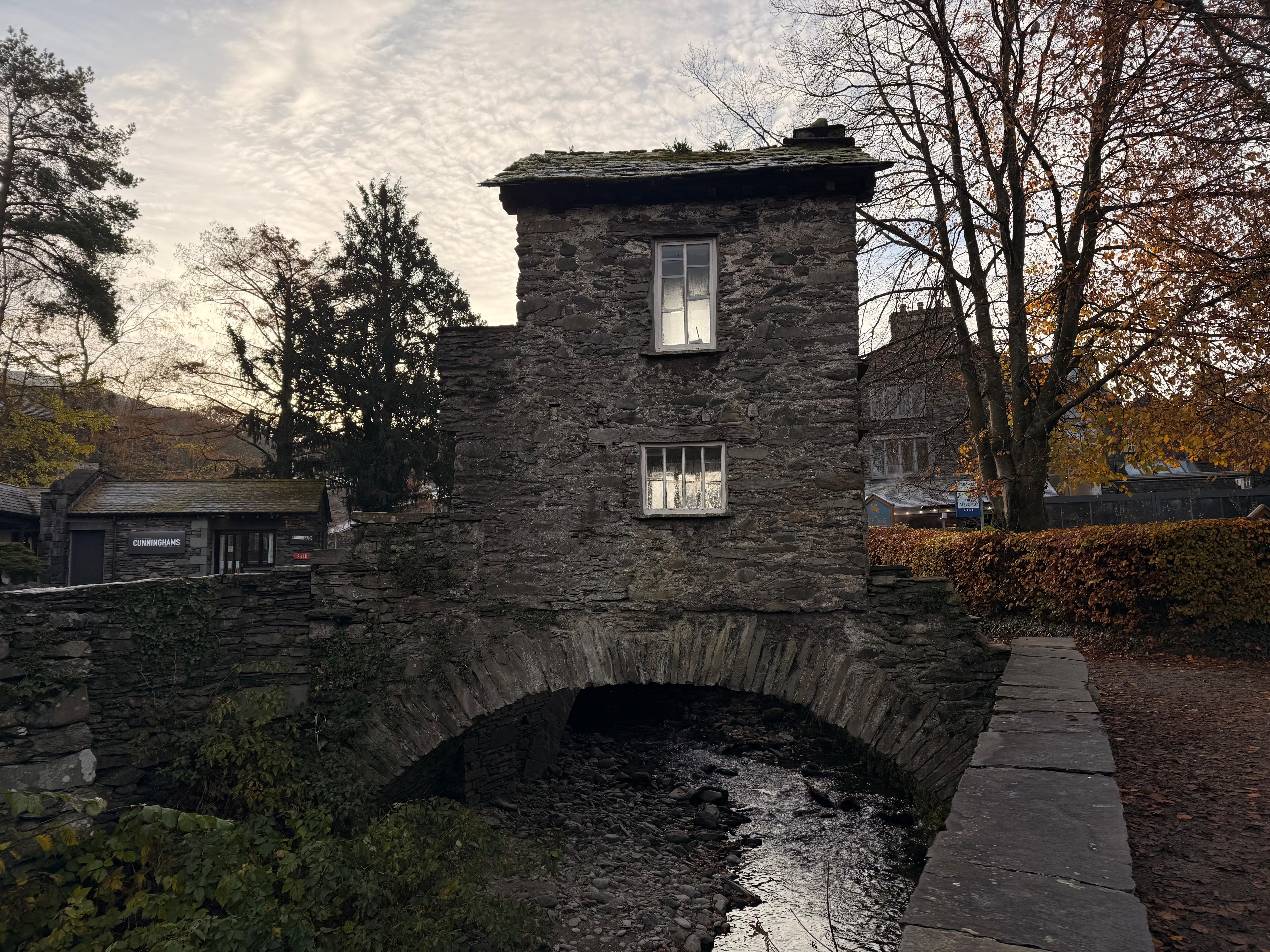
But since I started my newsletter and began digging into Lake District history, I’ve been looking at places I thought I knew with fresh eyes. And I thought, right. Let’s find out more about this strange little house on the bridge.
Table of Contents
Why go to Bridge House early in the morning?
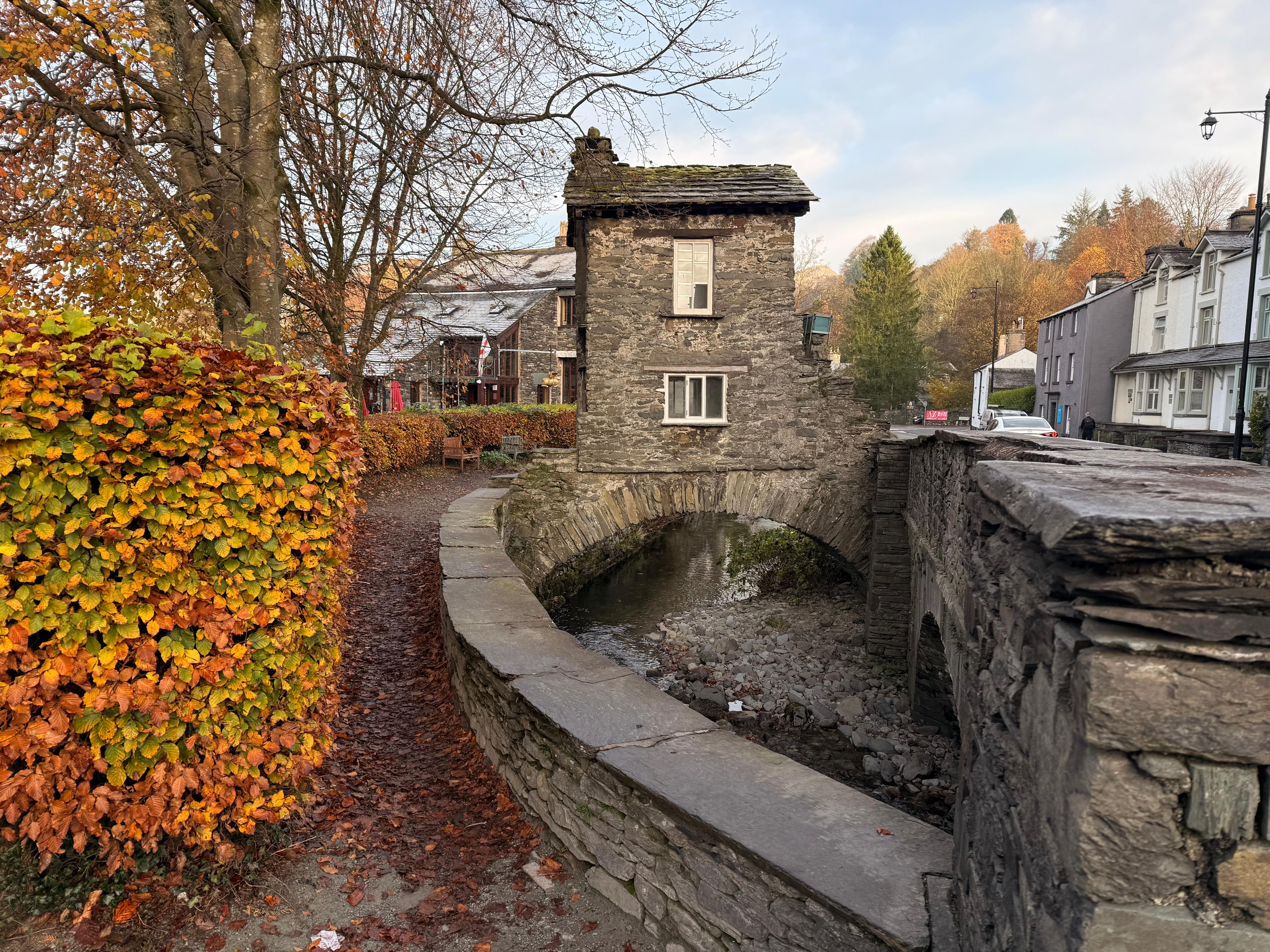
Ambleside gets jam-packed whatever the season. (Obviously, it’s murder in summer.) Once it’s busy there’s very little space to park on the streets. There are a couple of large carparks, but I was just nipping in and out, so I went really early, at about quarter to nine on a November morning.
The only people about were getting ready to go to work. None of the shops were open. I passed a few hikers heading out for the day, but it was quiet. And it was one of those gorgeous autumn days we get here in the Lakes, with beautiful blue skies, so I got quite a few shots of it.
I just wanted to see it properly.
Why was Bridge House built on a bridge?
The story goes that it was built over Stock Beck to dodge land tax. It dates from the late 1600s, when the Braithwaite family of Ambleside Hall needed a way to reach their land on the other side of the beck, and somewhere to store the apples from their orchard.
And I love that. Somebody was so sneaky, so full of amusement and devilment, that rather than pay land tax, they built a house on a bridge.
It’s a feat of engineering, too. It really is a marvel. It’s a lovely, well-made little building, and it has survived more than three hundred years of Lake District weather.
What has Bridge House been used for?
Since the apples, it’s had a really colourful history. It’s been a counting house for the mills along the beck, a weaver’s, a cobbler’s, a tearoom and a chair maker’s workshop. In 1956 it became the National Trust’s first information centre, and it was later a Trust shop.
Apple store, cobbler’s, tearoom: I can understand all of those. They speak to the tourism of the place. What I had no idea about was that people actually lived there.
Did a family really live in Bridge House?
Yes. Census records show that in the 19th century it was home to John Rigg, known as ‘Chairy’ Rigg, his wife and their six children. He was a basket weaver who made rush seats for chairs.
Eight people.
When I looked at it with fresh eyes, not as the quirky thing I’d walked past forever but as somebody’s actual home, I couldn’t help but wonder how life was day to day in there.
And a winter in there? It’s a stone building above a river, so it must have been absolutely freezing. Then there’s the beck running right underneath. When we get heavy rain here the river swells, and I can’t imagine what it was like in a storm. It must have been quite scary at times.
Who saved Bridge House?
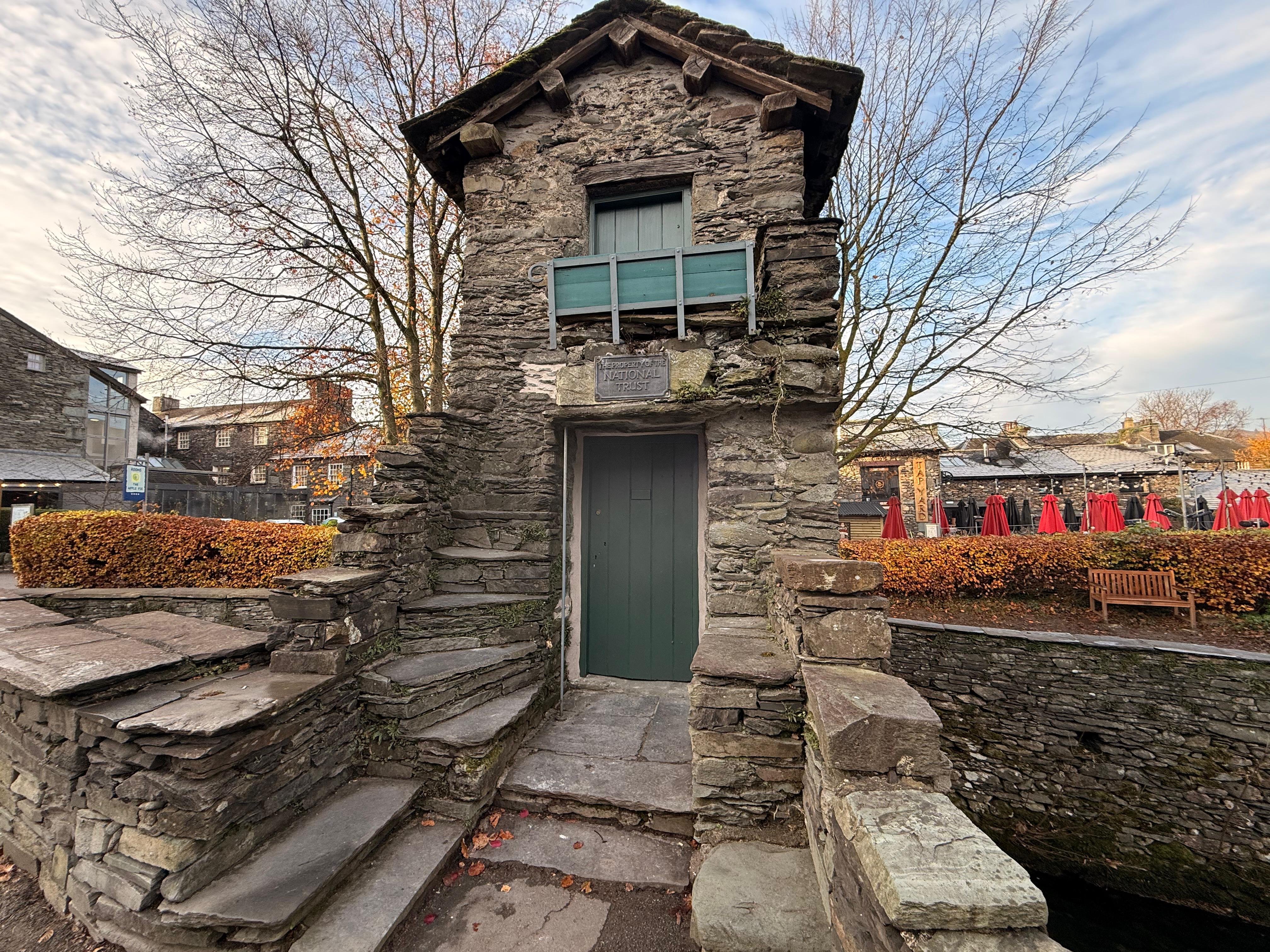
By the 1920s Bridge House was in a poor state and under threat of demolition. A small group of locals raised £1,244 11s 10d, bought it in 1926 and gave it to the National Trust. The group included Beatrix Potter’s husband, William Heelis, Wordsworth’s grandson Gordon Wordsworth, and Edith Fletcher, the wife of National Trust founder Hardwicke Rawnsley.
I didn’t know about the Wordsworth and Beatrix Potter connections until I started digging. (If you like a Wordsworth family secret, I found another one in Porto.) I think it’s lovely that the town got together to save it, and I’m so pleased it’s still here, with all this history, for everyone to come and see.
Can you go inside Bridge House?
Probably not, if I’m honest. It was closed when I went, and in all the times I’ve passed it, I’ve never once seen it open. I’ve seen tons of tourists taking pictures and videos of it, but I’ve never seen anybody walk inside.
At the moment the National Trust lists Bridge House as closed, with limited access through the Armitt Museum’s escape box experience, The Bridge House Mystery. It’s inspired by the real Rigg family and wraps a fictional story around them. It lasts 90 minutes and is for groups of two to four, aged 8 and over. You book it through the Armitt.
So if going inside matters to you, really check before you go.
How do you see Bridge House from every side?
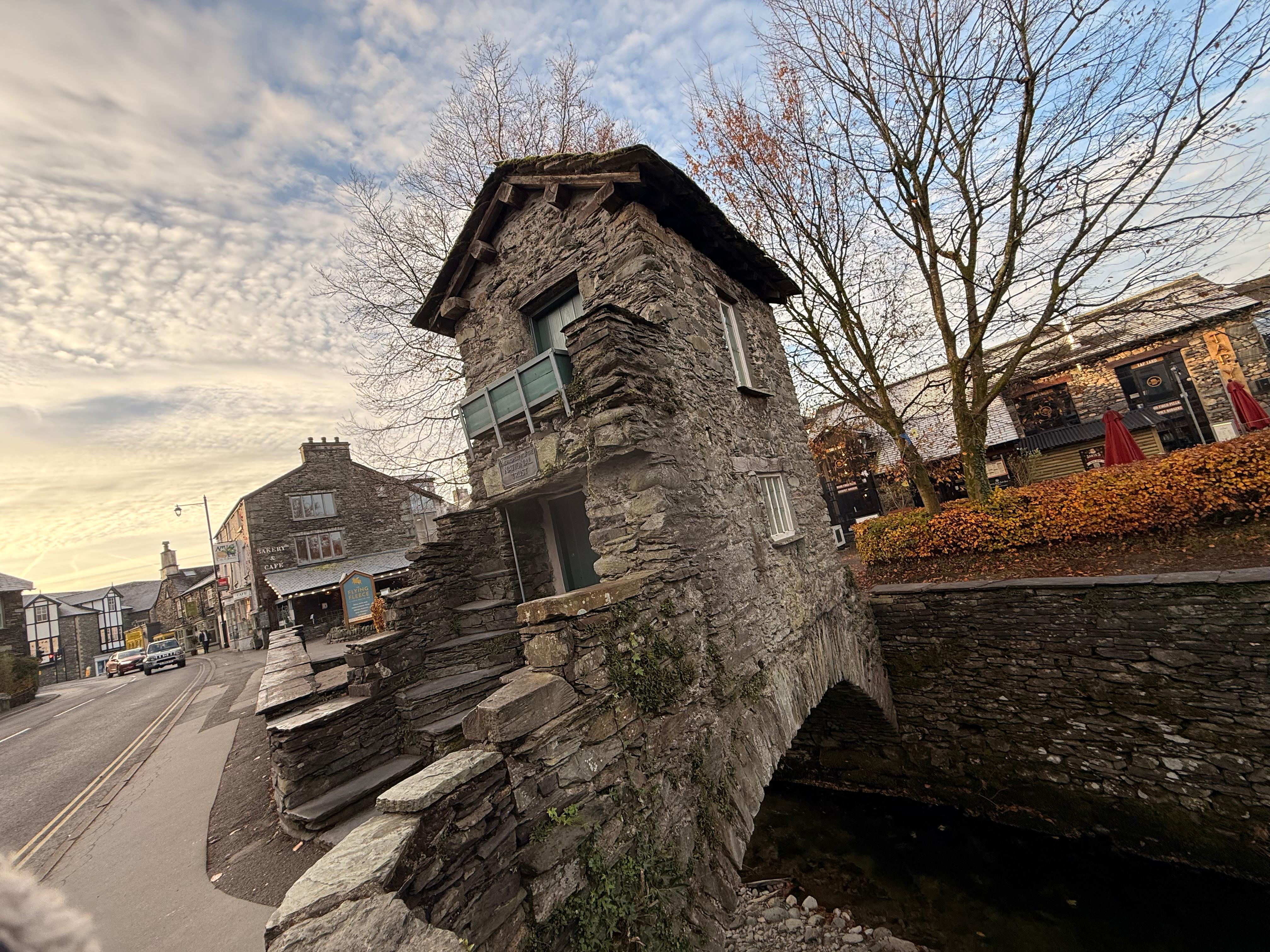
Even when it’s closed, it’s well worth a look. There’s a street on one side, and on the other there are little steps down to some benches, so you can walk round and see it from all sides.
Take some pictures. Then stand there and imagine eight people living in it before it was bought in 1926. It’s well worth seeing for that alone, and for wondering what on earth prompted somebody to build it in the first place.
Where do you park for Bridge House?
I was lucky enough to find a space on one of the streets. If you do this, here’s an important note: on-street parking in Ambleside is time-limited, and you need a parking disc in your windscreen, set to the time you arrived.
You can pick one up free from loads of local shops, including the Tourist Information Centre at Market Cross, Henry Roberts Bookshop, the Spar and the Co-op on Compston Road. Always check the signs for how long you can stay.
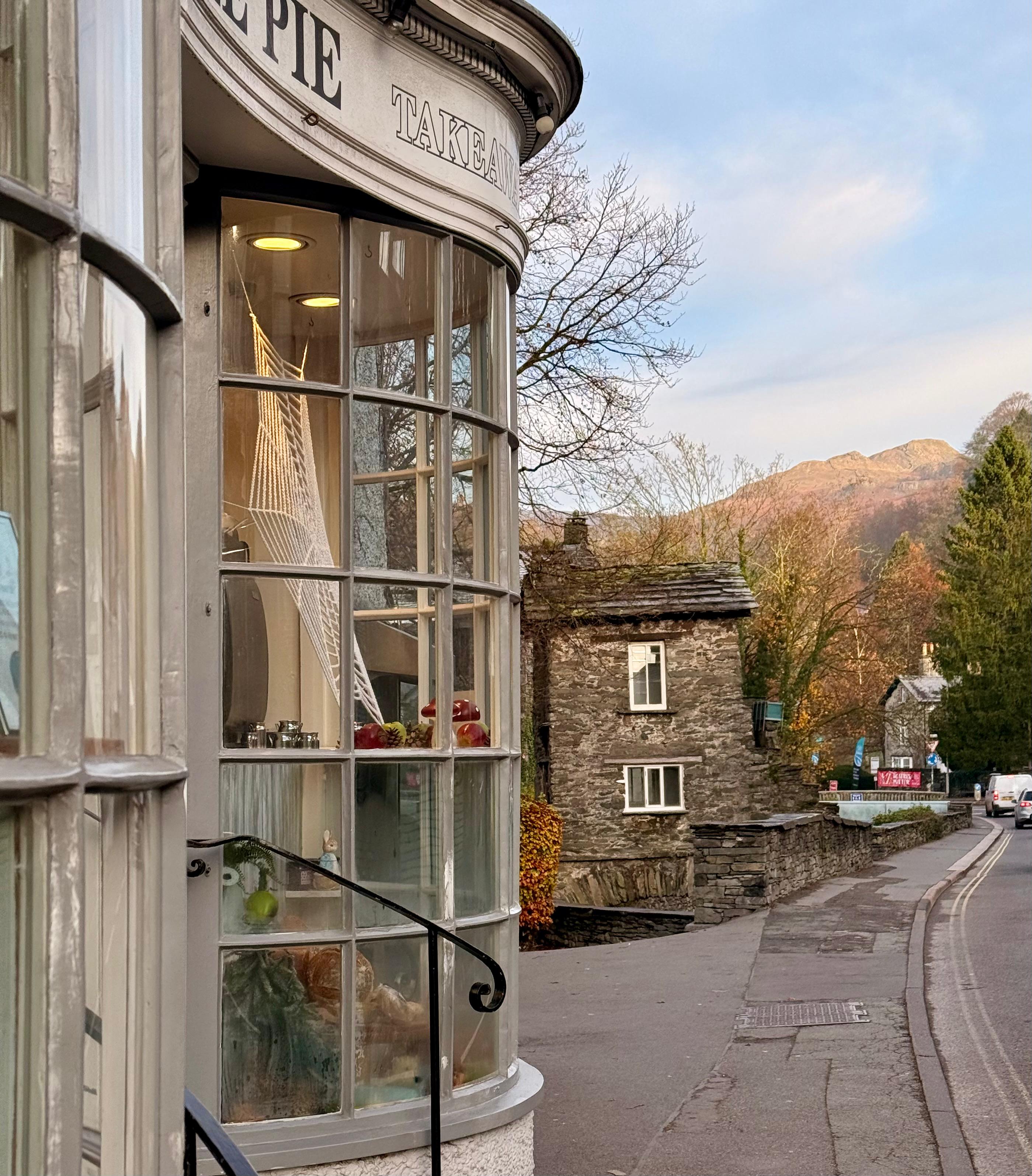
If you’d rather not hunt for a space, the closest car park to Bridge House Ambleside is Rydal Road pay and display, right behind it and a couple of minutes’ walk away.
Where can you eat and drink near Bridge House?
I’d highly recommend the Flying Fleece next door. It’s in an old mill on Stock Beck (fitting, really, since Bridge House once kept the mills’ accounts), and in summer it has a lovely outdoor seating area by the beck. It even has heat lamps for when it gets a bit chilly in the evenings.
The food is good, and it’s dog friendly. It’s a really nice place to have a drink by the water and look at the house on the bridge.
Bridge House Ambleside FAQs
Why was Bridge House built on a bridge?
Local legend says it was built over Stock Beck to avoid land tax. It was also a practical way for the Braithwaite family of Ambleside Hall to reach their land and orchard on the other side of the beck.
Did a family really live in Bridge House?
Yes. In the 19th century, John ‘Chairy’ Rigg, a basket weaver, lived there with his wife and six children.
Can you go inside Bridge House?
Not usually. The National Trust currently lists it as closed, with limited access through the Armitt Museum’s Bridge House Mystery escape box, which you book in advance.
Is Bridge House free to see?
Looking at it from the outside costs nothing, and you can walk round it and down the steps to see it from every side at any time.
Where do you park for Bridge House?
Rydal Road car park is right behind it. Street parking nearby needs a free parking disc, which you can get from many local shops.
Who owns Bridge House?
The National Trust. Local residents bought it in 1926 and gave it to the Trust.
If you’re in Ambleside, 100% go and see it.
Beautiful places hide terrible things, and sometimes the hardest lives were lived inside the prettiest buildings.
For more darker Lake District history, try my Bowness-on-Windermere history walk, or start with things to do in Windermere.